AI agent deployment in 2026 is shifting focus. The question companies ask has moved from "what can an agent do?" to "how do we know what it did, what it cost, and who is accountable?" Data from Gartner, McKinsey and Deloitte shows that many organizations have tried agents, while far fewer run them in production with real oversight. This post pulls together the numbers worth knowing and five things small and mid-sized teams should settle before moving an agent out of the pilot stage.
AI agent deployment by the numbers
The four sources below were collected at different times, so we list the dates to keep each figure in context.
| Source | When | Key figure |
|---|---|---|
| McKinsey, The State of AI | Surveyed June–July 2025, 1,993 participants | 23% are scaling an agentic system in at least one part of the business; another 39% have started experimenting |
| Gartner (via Reuters/The Star) | Prediction, June 2025 | Over 40% of agentic AI projects will be canceled by the end of 2027 |
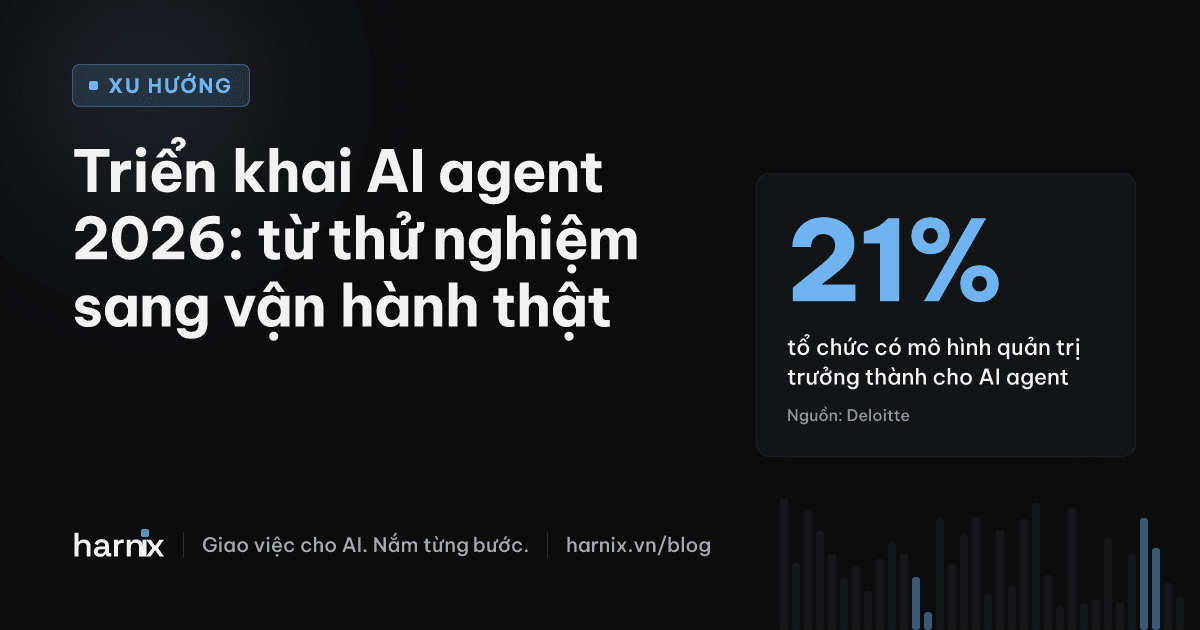
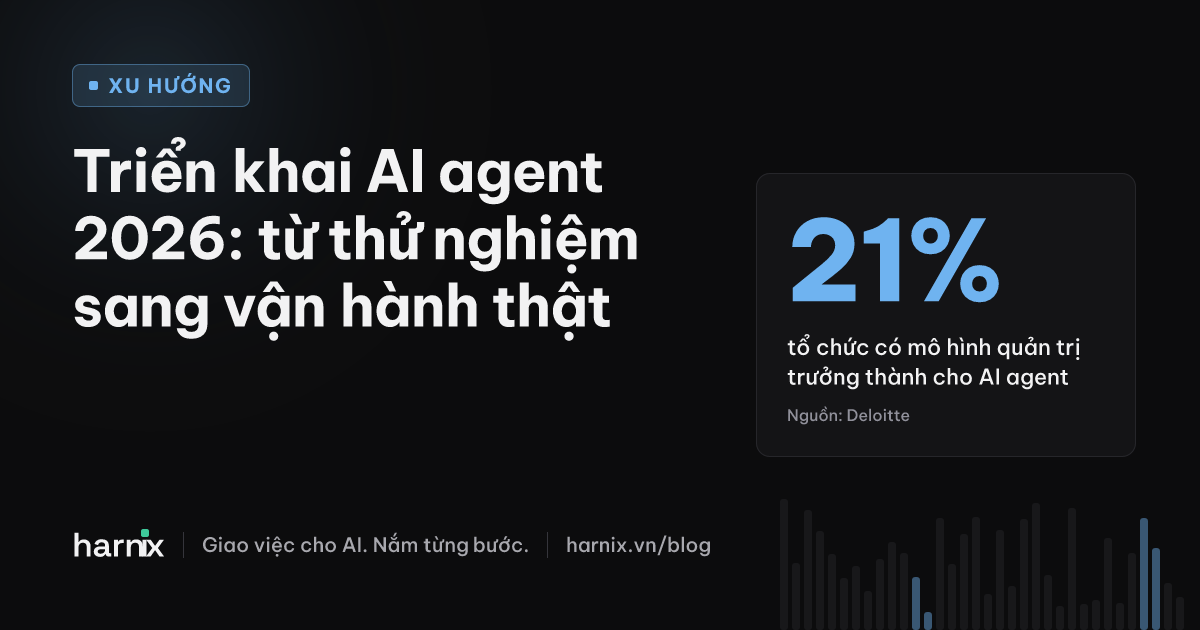
| Deloitte, State of AI in the Enterprise 2026 | 3,235 leaders, 24 countries | 74% expect to use agents at least moderately by 2027; only 21% have a mature governance model for agents |
| IBM, TechXchange announcement | October 27, 2026 | Cites Gartner: only 13% of organizations believe they have the right AI agent governance in place |
Read together, the numbers tell one story. According to McKinsey, no more than 10% of respondents say their organizations are scaling agents in any single business function. Demand for agents is growing faster than the ability to monitor and control them.
Why "agent control" has become a hot topic
In late October 2026, IBM announced identity, access and control capabilities for AI agents. According to IBM's release, each agent gets a record of its owner, lifecycle status and granted authority, receives short-lived least-privilege credentials, and can have its access revoked in real time when it acts outside its scope. The release also mentions tracking costs by model and token use.
We care more about the direction than about any single product. When large vendors invest in "managing agents," it signals that the hard part for companies has moved from building agents to operating them: keeping an agent accurate, within the budget you planned, and with someone responsible for reviewing its work.
Why so many projects stall at the pilot stage
Gartner names two main reasons agent projects get canceled: escalating costs and unclear business value. In the same report, Gartner estimates that only about 130 of the thousands of vendors calling themselves "agentic" have genuine agent capabilities; the rest are rebranded chatbots and assistants.
From the point of view of a small team adding an agent to its product, we see three recurring sticking points:
- No way to measure value. The pilot is judged on a feeling that "the answers seem good," with no before-and-after numbers.
- No idea where the money goes. The model bill arrives at month end, and nobody knows which conversations or features drove it.
- No way to explain mistakes. A customer complains about an answer, but the team can't see which documents the agent read or which tools it called.
All three are operations problems. None of them is solved by picking a stronger model.
5 things to settle before putting an AI agent into production
This list is for small and mid-sized companies that already have an app or website and want to move an agent from a test build to real customers.
1. One specific job and one metric
Pick a narrow job, such as answering questions about your return policy, and a metric you can count: questions the agent resolved, times customers had to ask again, requests still handed to staff. Record the number before you switch the agent on so you have a baseline.
2. A spending cap from day one
Set a daily token or budget limit for each agent before customers can reach it. A tool-calling loop that misbehaves, or a promotion that brings a crowd at once, can push costs up within hours. With a cap, you know the worst case before it happens.
3. A record of every step in every answer
Each answer should leave a trail: the original question, the documents read, the tools called and with which parameters, the results returned and the tokens used. When a complaint comes in, your team opens that exact turn instead of guessing. We go deeper into this idea in Why every agent answer is a Run.
4. Separate reading from writing
Looking up an order and canceling an order carry very different risks. List the tools your agent can use and mark which ones only read data and which ones change it. For the second group, add a step where the customer or a staff member confirms before the agent acts.
5. A set of real questions and a review routine
Collect 30–50 real customer questions (with personal details removed) as a test set. Every time you change the prompt, the model or the documents, run the set again and compare. Once you're live, set aside time each week to read a random sample of conversations, especially turns where the agent said "I don't know" or the customer dropped off.
Do small companies need "agent governance" like large enterprises?
The scale is different; the questions are the same. A large enterprise worries about thousands of agents and the identity of each one. A small or mid-sized company may run one or two agents, yet it still needs to answer: what did the agent tell the customer, based on what, at what cost, and who on the team reviews it.
Deloitte's 21% figure suggests that most organizations, large ones included, deploy first and build governance later. Smaller companies have fewer agents and fewer processes, which makes it easier to do things in the right order from the start.
Where Harnix fits
In Harnix, every agent answer is a Run with a step-by-step trace: the documents read, the tools called and the tokens used, so your team can check the work when it matters. You can read more in the Harnix docs or reach us at harnix.vn.
Frequently asked questions
How is deploying an AI agent different from deploying a chatbot?
A chatbot mostly answers questions. An AI agent can plan steps, read documents and call tools such as looking up an order or opening a support ticket. Because an agent acts inside real systems, recording each step and limiting its permissions matter far more than they do for a chatbot.
Why do so many AI agent projects get canceled?
According to Gartner, the two main reasons are escalating costs and unclear business value. Gartner predicts that over 40% of agentic AI projects will be canceled by the end of 2027.
Where should a small company start with AI agent deployment?
Start with one narrow job and a clear metric, set a daily spending cap, record every step of every answer, and require confirmation before the agent changes any data.
How many companies have AI agent governance in place?
Deloitte's 2026 survey found that 21% of organizations have a mature governance model for agents. A Gartner figure cited by IBM puts the share of organizations that believe they have the right agent governance at just 13%.