AI agent observability means recording and being able to inspect what an agent did on each run: which documents it read, which tools it called, why it took each step, and how many tokens it used. The topic picked up in early November 2026 after a new survey found that many businesses consider visibility into agent decisions important, while far fewer have it in place. This article covers the numbers, why the gap matters for small and mid-sized businesses, and what to record starting with your first agent.
What's new in AI agent observability this week
On November 10, 2026, Dynatrace published its State of Observability 2026 report, based on an online survey of 1,202 technology leaders in 12 countries, fielded in August 2026. A few numbers stand out:
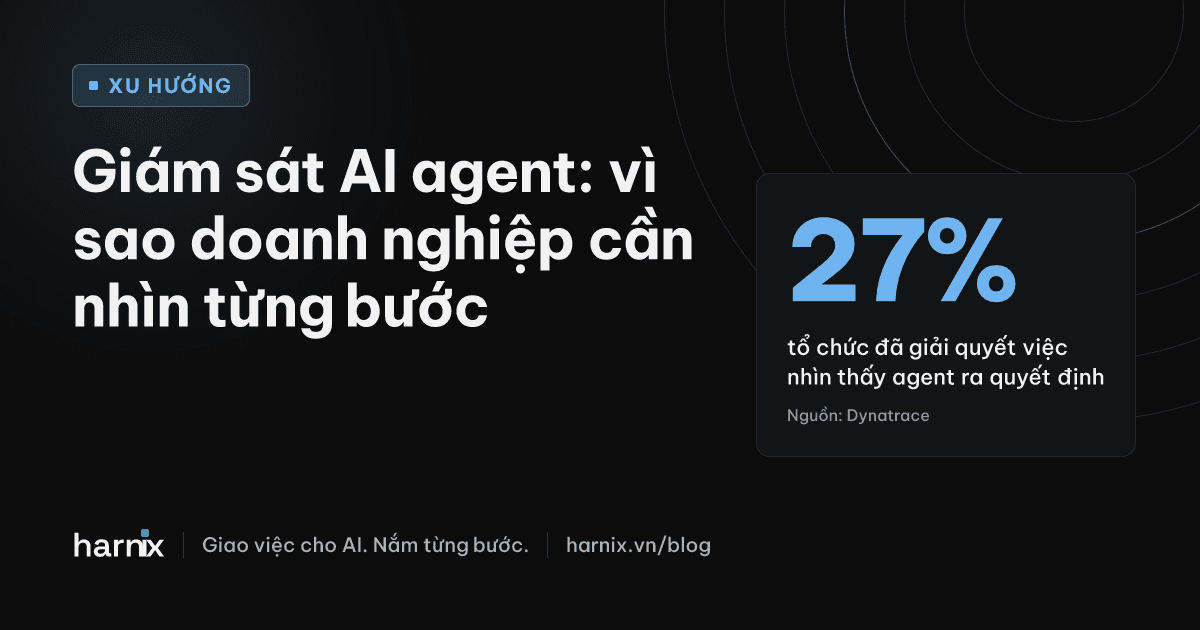
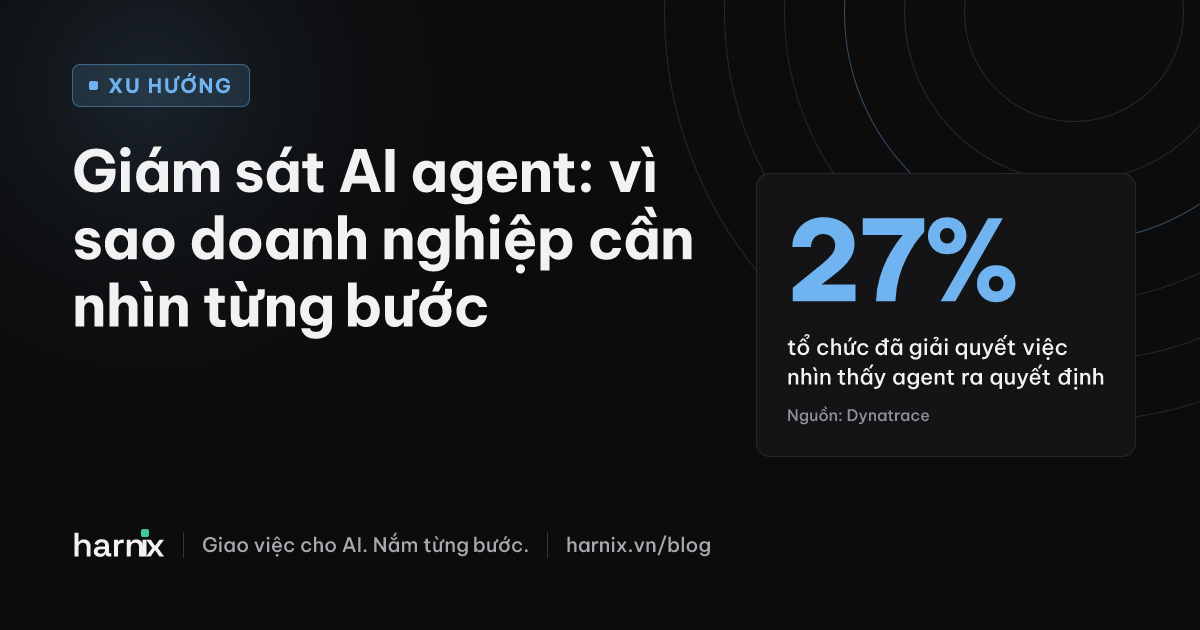
- 43% say visibility into how agents decide and act is important, but only 27% currently address it.
- Respondents say humans still verify an average of 66% of AI-powered decisions.
- 81% report higher compute and infrastructure spending from AI workloads, and 77% say they need clearer visibility into where costs belong.
A week earlier, on November 3, 2026, CrowdStrike announced it will acquire Fiddler, a company focused on monitoring and explaining AI agent behavior. The announcement describes tracing agent decisions, reasoning and tool calls, detecting hallucinations and unintended actions, and tracking token usage. CrowdStrike CEO George Kurtz called Fiddler "the flight recorder for every agent."
Both stories come from large vendors, but the question behind them applies to any business: when an agent answers a customer or acts inside your systems, do you know what it did?
Why "it seems fine" is no longer enough
A chatbot that gives wrong answers can run for a week without anyone noticing. A customer asks, gets an incomplete answer, and leaves. No error is raised, because technically everything is still "working."
A Cloud Security Alliance survey published in April 2026 (418 IT and security professionals) shows the gap between perception and reality: 68% believe they have strong visibility into their agents, yet 82% of organizations have unknown AI agents running in their environment. In the same survey, 65% reported at least one AI agent-related incident in the past 12 months.
For a small business, the scale is smaller but the problem is the same. You might have one chatbot on your website and one internal agent. When a customer complains that "the bot quoted the wrong price," you need to answer three questions: which documents did the bot read, why did it pick that answer, and how often has this happened?
How agent observability differs from regular monitoring
Regular software follows a fixed path. An agent chooses its next step based on the question, the documents it finds, and the tools it's allowed to use. Checking only "is the server up and how fast does it respond" isn't enough.
| Question you need to answer | Regular software monitoring | AI agent observability |
|---|---|---|
| Is it running? | Uptime, error codes, latency | Still needed, plus errors from the model provider |
| Why this result? | Read the code | Inspect each step: documents read, tools called, reasoning |
| Is the result correct? | Test before release | Check continuously in production, since questions are always new |
| What does it cost? | Monthly infrastructure bill | Tokens per run, per agent, per user |
| Who allowed this action? | Fixed permissions | Which actions need approval, and who approved them |
The finding that humans still verify 66% of AI decisions in the Dynatrace survey shows businesses aren't ready to hand everything to agents. But reviewers can only check what they can see.
What to record from your first agent
You don't need a large monitoring stack to start. Record these five things for every run (every answer):
- The question and the final answer. The minimum you need to replay a conversation when someone complains.
- Documents read. Which passages from your knowledge base went into the context. Most wrong answers come from retrieving the wrong or incomplete documents, not from a "weak" model.
- Tools called and their results. If the agent looks up an order, creates a ticket or sends an email, you need to know what it called, with which parameters, and what came back.
- Tokens and cost per run. Roll them up by agent and by user to spot unusual spending, such as a tool-call loop.
- Actions that need approval, and who approved them. For anything that writes data, record who agreed and when.
Two design notes:
- Set a retention period. Conversation logs can contain customers' personal data. Keep detailed content for a limited time and keep aggregate numbers longer.
- Use open standards where you can. OpenTelemetry is widely used: according to the same Dynatrace report, 77% of organizations have moved OpenTelemetry beyond evaluation. Data in an open format is easier to move to other tools as you grow.
From logs to improvements
Recording is only the first step. The real value comes when you use the logs to fix the agent:
- Each week, review low-rated answers and group them by topic. Ten wrong answers about the same policy often need just one document fixed. We cover the process in Chatbot giving wrong answers: how to find and fix weak spots.
- Compare cost with value. Which agent uses the most tokens, and does it resolve enough work to justify it? AI token costs are rising covers ways to keep the bill in check.
- Expand permissions step by step. When the logs show an agent handles one type of task correctly and consistently, you have grounds to reduce the approvals required for that task.
Frequently asked questions
What is AI agent observability? Recording and inspecting each step an agent takes on every run (documents read, tools called, decisions and token cost) so you can explain, check and improve its answers.
Do small businesses need AI agent observability? Yes, if the agent answers customers or acts on real data. At minimum, store the question, answer, documents read, tools called and tokens for every run.
Does agent observability expose customer data? Logs can contain personal data, so limit who can view them, set a retention period for detailed content, and keep only aggregate numbers long term.
Where should I start? With one agent that's already live. Record the five items above, review low-rated answers weekly, and only then consider more complex tooling.
How Harnix handles this
In Harnix, every agent answer is a Run, and the Run's trace records the documents read, tools called, approval steps and tokens used. You can read more in the Harnix documentation, or get in touch through harnix.vn to see a Run working on your own documents.