Shadow AI is when employees use AI tools their company hasn't approved (public chatbots, browser extensions, self-built agents) to get work done, often with internal data. Three reports published this year show it is already widespread and is starting to cause real incidents. The fix that works isn't banning AI. It's giving that demand an official channel with clear rules and a record of what happened.
What is shadow AI?
Shadow AI is the AI version of shadow IT: technology used for work that nobody responsible for it knows about, approved or can monitor. The difference is how easily AI takes in data. Paste a contract clause, a customer spreadsheet or a block of code into a chat box, and that data has already left your company's systems.
A few familiar examples:
- A salesperson pastes a customer list into a public chatbot to write outreach emails.
- Someone in finance uploads a financial report to a free AI tool to get a summary.
- A developer installs an AI extension that can read every internal page open in the browser.
- A team builds its own agent and connects it to email or a document store with a personal account.
Nobody in these examples means any harm. They use AI because it makes them faster. The problem is that the company has no idea which data went where.
New data: how widespread is shadow AI?
Three recent sources paint the same picture:
| Source | Sample | Key finding |
|---|---|---|
| Palo Alto Networks, State of Cloud Security Report 2026 (Nov 16, 2026) | 2,800 security leaders and practitioners, 10 countries | 99% found ungoverned AI in their environment in the past year; only 9% can automatically discover and classify it |
| Pipefy (Nov 16, 2026) | 148 Pipefy customers in the US and Brazil | 34.2% of US companies say employees use public AI tools with no control, visibility or policy |
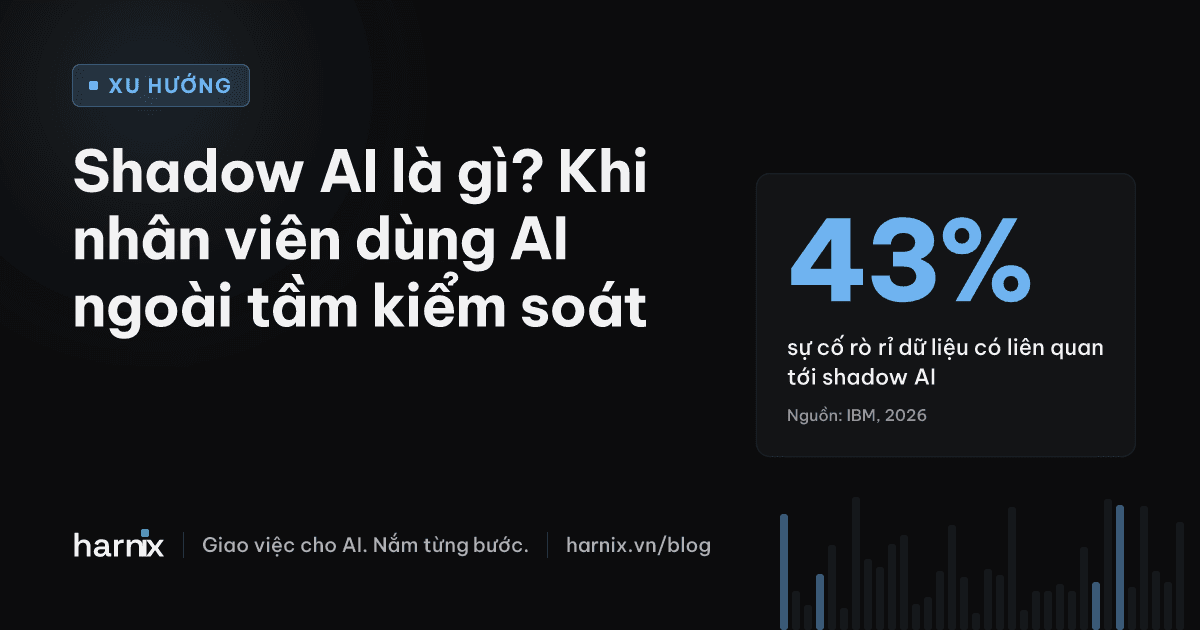
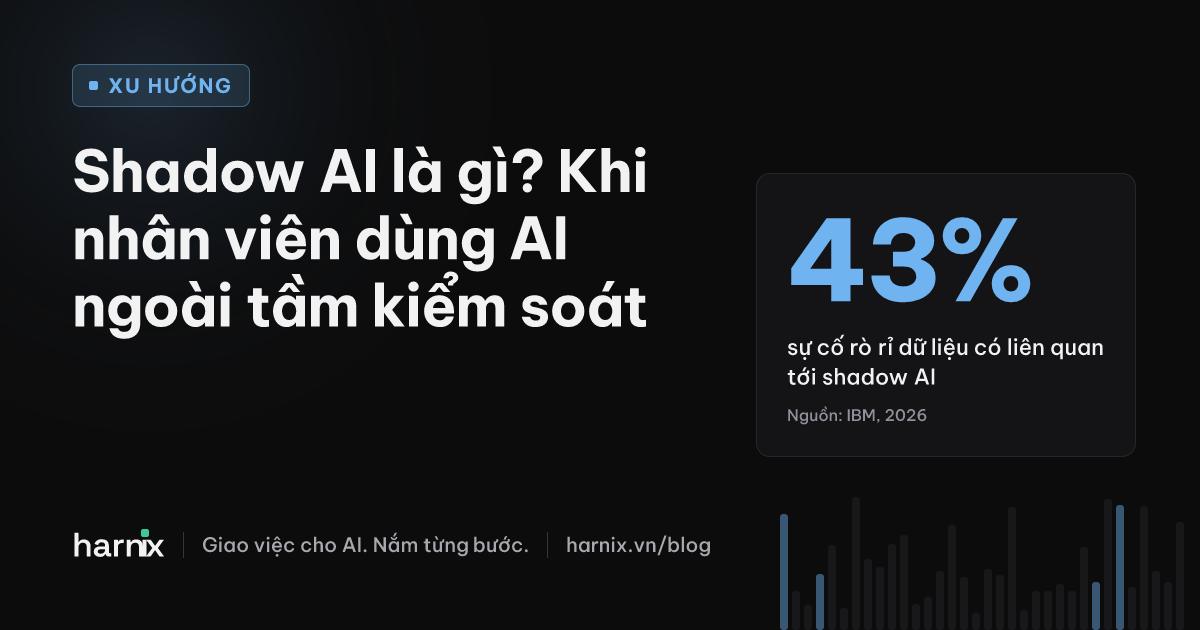
| IBM, Cost of a Data Breach Report 2026 (July 2026) | 602 breached organizations, 16 countries | Shadow AI was involved in 43% of incidents, more than double the prior year |
According to the Palo Alto Networks report as covered by SiliconANGLE, 40% of respondents said governed data had been copied into ungoverned AI tools.
Pipefy's survey also found that 21.9% of companies don't know how they handle this, only 24.7% have clear guidelines or approved platforms, and 4.1% ban public AI tools outright. It's a small sample drawn from one vendor's customers, so read it as a signal rather than a market-wide measurement.
The weightiest data comes from IBM. As Cybersecurity Dive summarized the IBM 2026 report, more than two-thirds of breached organizations had no governance process to limit shadow AI, and 92% of organizations whose AI models were attacked did not properly control access to those tools. Only about four in ten organizations limit access to their AI systems.
Why do employees keep using unapproved AI?
Most shadow AI comes from a gap, not from people deliberately breaking rules. Three common reasons:
- There is no official tool, or the one on offer is weaker than the public version.
- Approval is slow: getting a tool signed off takes weeks, while the work is due today.
- Nobody has said which data can go into AI: without rules, everyone guesses.
That's why an outright ban usually just pushes AI use further out of sight. The need is still there; the company simply sees less of it.
The real risks of shadow AI for a business
| Risk | Example | Consequence |
|---|---|---|
| Data exposure | Customer details or cost prices pasted into a public chatbot | Loss of control over data, broken confidentiality commitments to customers |
| No audit trail | No record of who sent what to which tool | Incidents can't be investigated |
| Unchecked wrong answers | AI answers from general knowledge, not company documents | Wrong information reaches customers or reports |
| Scattered costs | Everyone pays for their own AI plan | No view of total spend, no shared limits |
| Self-installed agents with broad access | An agent connected to email or documents via a personal account | Unintended actions that nobody approved |
The second risk is the one most often underestimated. The Palo Alto Networks report found that two in five organizations cannot reconstruct what an AI agent did. Without a record, neither good work nor mistakes can be verified. We covered this in more depth in AI agent observability: why businesses need to see every step.
5 steps to control shadow AI without banning AI
1. Ask first, don't punish. Run a short, anonymous survey: which AI tools people use, for what, and with what kind of data. The goal is to see the real demand.
2. Sort data into three levels. For example: public (fine for any tool), internal (approved tools only) and sensitive (customer data, financials, contracts: never into external AI). Three levels are enough for people to decide in seconds.
3. Offer an official AI channel that beats the public one. The official tool should answer from your company's documents, live inside the apps people already use, and not require a complicated access request. If the official option is worse, people will drift back to the public one.
4. Keep a record and set limits. Every AI answer should leave a trace: who asked, which documents the AI read, which tools it called, and what it cost. Add usage limits per person or per team so costs stay under control. For agents that can write data, keep a human approval step, as we described in AI agent permissions: approvals, limits and a stop button.
5. Approve fast, review regularly. Aim to approve new tools in days rather than weeks, and review the list every quarter. AI tools change quickly, and the rules need to keep up.
Shadow AI is spreading from chatbots to AI agents
Early on, shadow AI mostly meant pasting text into a chatbot. Now employees can build an agent connected to email, calendars and document stores in minutes. According to the same Palo Alto Networks report, 53% of respondents said agent activity is logged under a developer's identity or personal access token, which makes it harder to establish accountability when something goes wrong.
For small and mid-sized businesses the lesson is simple: any agent that touches real data should run in an environment with a clear account, limits and a step-by-step record, not on one person's personal account.
Frequently asked questions
How is shadow AI different from shadow IT? Shadow IT is any software or service used outside the company's oversight. Shadow AI is a subset of it, but the risk is higher because data goes into AI with nothing more than copy and paste.
Should we ban employees from using ChatGPT or other public chatbots? An outright ban rarely meets the underlying need. A more durable approach is to state clearly which data can go in and to provide an official tool that's good enough.
Do small businesses need to worry about shadow AI? Yes. Small businesses have fewer people looking after security, so a single customer-data leak can hit harder. Three data levels and one official AI channel are a manageable starting point.
How do we find out whether we have shadow AI? Start with an anonymous survey, then look at spending on AI services and which browser extensions are installed. The Palo Alto Networks report found that only 9% of organizations can automatically discover ungoverned AI, so asking directly is still the fastest route.
Bring AI into an official channel
If you plan to add an official AI assistant to an internal app or a customer-facing app, Harnix records every agent Run: the documents it read, the tools it called and the token cost, so every answer can be checked afterwards. See how it works in the Harnix docs or get in touch at harnix.vn.